What if the symbols, numbers, and patterns we've dismissed as superstition are actually part of a much older system of understanding the world?
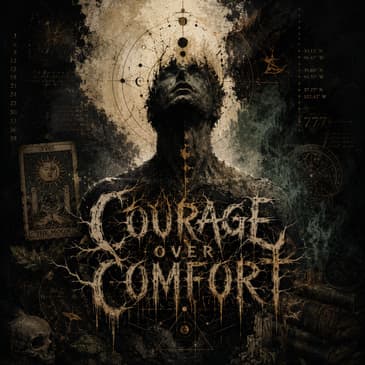
In this episode, Brandon sits down with Christian, founder of Courage Over Comfort Corp., for a conversation that spans astrology, tarot, numerology, artificial intelligence, true crime, and the psychology behind humanity's search for meaning. Christian explains how his fascination with occult philosophy led him to create unconventional projects that blend symbolism with modern technology, including a true crime tarot deck and software designed to assist criminal investigations using astrological calculations.
The discussion explores whether ancient systems still have practical applications today, why governments and financial institutions have long been rumored to study astrology, and how curiosity continues to drive both scientific discovery and spiritual exploration.
The conversation also dives into AI-generated art, the future of creativity, conspiracy theories, disclosure, the ethics of emerging technology, and even takes an unexpected detour into zombie survival strategies, casino probability, and the ever-growing role of artificial intelligence in everyday life.
Whether you view these ideas as philosophy, psychology, coincidence, or something much stranger, this episode asks one central question: How much of reality are we actually seeing?
Hosted by Simplecast, an AdsWizz company. See pcm.adswizz.com for information about our collection and use of personal data for advertising.
[00:00:03] And I just turned around and I pulled ass out of there. I was done. I wasn't dealing with that. The hypocrisy of the cult is one of the things that turned me away the quickest. When I turned my headlights on, it turned and looked at us. And one of the things I remember the most were the eyes were glowing red.
[00:00:30] I see an orb of light. It is just circling these steps like it is waiting for me. He begins to tell them that he saw a UFO. They're basically like, what are you talking about? That's seven foot up on a tree, peeking around it. And that's where I saw the top of the muzzle, nose and the eyes.
[00:00:58] As soon as I made eye contact with this thing, it felt like death. Welcome back to Tinfoil Tales. I'm your host, Brandon. Tonight we're joined by my guest, Christian. Christian, thanks for coming on here talking with me. Thank you for having me. Would you like to let the audience know a little bit about yourself? Sure. Yeah. Well, my name is Christian. I'm the owner of Courage Over Comfort Corp.
[00:01:24] We're a multidisciplinary publishing house. We make everything from board games to video games, softwares, apps, websites, just about any kind of multimedia. We get our hands in there. The only real difference between us and like another company like us would be that, you know, everything we do is kind of new and original.
[00:01:50] And like the company name, you know, we like to choose Courage Over Comfort in a lot of the things that we do. So like a lot of the things we do sometimes come off as crazy or shocking or unbelievable. But that's just what we do. Is there a specific reason of what got you into this? Like why you wanted to do this type of board game and the card, the tarots and everything? Like what got you into this whole thing?
[00:02:19] Sure. Well, I've been an artist for as long as I can hold the crown, I guess. And I've always wanted to, you know, possibly make my career with art. And, you know, growing up, you get told a lot that, you know, oh, you can't make money with art. That's not a good, you know, life path and stuff like that. And to an extent, you know, people are true.
[00:02:43] It's a rough life path, you know, because not everybody makes it in the sense of whatever that definition of making it is, but or being able to support yourself doing it. And just always worked at it. And thankfully, I got here today as far as like the specific things that we do and like some of our like latest releases, like, you know, tarot and astrology and numerology and occult systems.
[00:03:11] That's another thing that's been a huge interest of mine since I was a child. You know, I remember being like, I don't know, I had to be maybe like 12 years old or so, maybe, maybe a little bit older than that. But I remember like trying to research like what happens after you die. I'm like, that's probably not something a 12 year old should be researching. And like, you know, I got into the whole, oh, well, your brain releases diamethyltryptamine when you die. Diamethyltryptamine is in like every living thing.
[00:03:38] Oh, and you could like actually make this with like grass on your lawn and synthesize it into a crystal and you could experience death and all these things. So that's like kind of just like an example of like where my brain was at as a kid. It's always been very like exploratory and like, like knows no bounds, like always want to talk about and look at and research the things that a lot of people don't like to talk about or they just like to push to the side because it makes them uncomfortable.
[00:04:09] Usually when you bring up stuff with a cult, most people shy away from stuff like that because it becomes a little too taboo for them. Yeah, I think a cult kind of has like a little bit of a dirty word because like as the average person and this is even speaking for myself when I first got into this kind of stuff. When you think of a cult, you think of like, you know, like actual cults and like death cults and weird hoodoo voodoo magic and stuff like that.
[00:04:36] And that's not really what it is. A cult really just kind of like a broad labeling. Like if we went to a library, you would find, you know, books on astrology there. You would find books on tarot numerology, Kabbalah, you know, converting letters into numbers and all kinds of things like that. And this is this is stuff that's like this is like the original technology, right? This is the stuff that's been used before we had electronics and stuff like that.
[00:05:04] And it's still being used today. And unfortunately or fortunately, you know, it's getting more popular. But for a long while, the only people who really paid attention to this kind of stuff are like really, really, really rich people in the world and governments and agencies and stuff like that. They use astrology every day. I think it was Bernie Maddof who said that he said a famous quote, millionaires don't use astrology billionaires do.
[00:05:33] And I really like that quote because it's true. I mean, if you pay attention to things that happen like financially to like the stock market and stuff, a lot of it correlates to astrology. You know, if you pay attention to like NASA, when NASA launches a rocket or when we decided to go on the moon for the second time, apparently it's all astrology based. Right.
[00:05:57] And they do these things so that they have an advantage in their court. But if you know about it, then you know what they're doing and you kind of have an advantage back. I haven't heard anything about astrology being for the stock market. I'm going to have to look into that because maybe it's something that I should be paying more attention to.
[00:06:20] Oh, yeah, definitely. I mean, the stock market especially, if you look at some of the big boy traders and you look at the dates that they are selling or buying, it correlates directly to certain transits. And then if you look at like even like the government or the financial system of a country as a whole, and you look at things like Pluto, like when's the last time Pluto was around?
[00:06:49] Oh, the last time Pluto was around, you know, the Roman Empire fell, the Russian Empire fell, you know, it's it's it's these cycles that like if you understand the history and you understand what happened during those cycles, you can then for for for lack of a better word predict the future. Although I really don't like using that phrase. Yeah. Is there something like for what you're doing?
[00:07:16] And I don't I don't know how to word this correctly, but like, what are you trying to do with what you're putting out? You know what I mean? Like, I'm basically sure you're offering this stuff. But like, what is the what would someone who's interested in like, what would they come and look for it for? Like, what would they be interested in for? Well, that's a great question, because almost every project that I work on kind of tackles like a different thing.
[00:07:41] Right. So like our last release, which was Killer Cards Tarot, and that's also coupled with Aurora, which is our crimes software that we give for free to private investigators and detectives to use to fight crime. And that project specifically came to be because I noticed that the most popular movies, TV shows and podcasts were all true crime, murder, serial killer related.
[00:08:10] And I think what really tipped me over the edge is I seen a podcast that almost exclusively only talks about serial killers. And they had they sold out a football stadium where they recorded the podcast in the middle of the football stadium. And I was like, wow, I was like a podcast about true crime sold out a football stadium. I said, that's that's pretty crazy. And as well as like people around me, friends and family, everybody really interested in this stuff.
[00:08:38] And I think people are interested in it for certain reasons. One of the main reasons is shock value. People like to be shocked. Another reason is the who, what, where and why people really want to understand. But where, where the line kind of goes astray is people start glorifying these terrible, terrible acts and terrible people that did these things.
[00:09:06] And I thought to myself, wow, I wonder if there is a way to maybe give the people the answer that they're looking for without, I don't know, hiring Zac Efron to be Ted Bundy on a Netflix TV show. Right. Because that's definitely like, in my opinion, it's I think it's wrong. I understand that the company who did that was probably sitting around the round table like, hey, boss, I have a really good idea. We could sell we could sell out this TV show so much faster if we just put Zac Efron as the main character because everybody loves him.
[00:09:36] And I get that. But also at the same time, now you have people who like especially young women who think Zac Efron's cute. And now they think that Ted Bundy's cute because he played Ted Bundy and as well as many other multimedia is that come into the true crime space. So, you know, my first thought was like, oh, I could write a book about this or I could, you know, you know, do like a TED Talks type of thing on this and explain it a little bit thoroughly. And then I said, well, you know what? People probably aren't going to be interested in that because it's not necessarily entertainment.
[00:10:05] People like to be entertained. So I said, well, tarot is all about shadow work. Right. For the most part. But people who use tarot tend to avoid the shadow work.
[00:10:17] And by making killer cards, we sort of tricked people who are interested in these things to ask the tough questions and understand the who, what, where and why without being without glorifying the situation or the person or the thing or the crime. And it actually worked way better than I ever could have thought that it could ever work.
[00:10:44] And the whole process, I'll give you a little bit of information on the process behind it is we didn't like set out and like pick crimes and serial killers and say, yeah, this is going to be on this card. We got a list of about 200 plus of the most notorious, well-documented serial killer crimes. And we got the information of the person who committed the crime.
[00:11:09] We did their astrology chart and then we did the mathematical equation through the astrology chart to get their numerology and their tarot card match. Now, everybody has a tarot card match. You have your birth cards and your soul cards. Your birth cards are majors and your soul cards are minor cards. And when we did this, it would give us the exact card that was matched to their astrology. So like this is something that's given to you basically at birth, right?
[00:11:36] When you're born, you're born. That's the day, the day and the time that gives you your calculation of your cards and your astrology chart. And they were very, very accurate, even surprised me as somebody who has done this before and believes in the system. You know, we had people like the Unabomber who ended up being the tower and the towers literally the only card in the entire deck. That's a blown up building. And the Unabomber was well known for blowing up buildings.
[00:12:03] You had Ted Bundy as the magician and the magician is stands in a certain pose. And Ted Bundy in his court cases always standing in those poses. And you have Jeffrey Dahmer, who was a little bit more difficult because we had to do a Freedom of Information Act to get the court files and his journal. And we found in his journal, he actually had plans to, I guess, melt the skin off of two people and make an altar.
[00:12:31] And the altar was drawn out with the skeletons exactly as the lover's card is laid out in the tower deck. And we just kept getting these crazy synchronicities and whatnot.
[00:12:43] And why I say it worked better than I thought is because a lot of the people who are super interested in this are now coming back to me and, you know, sending me emails and messages like, wow, you know, I really didn't realize the dark path that this person chose and how I actually have the same cards as this person. I just chose a different path and I went this way.
[00:13:07] Or I could really see how Jeffrey Dahmer as the lovers, when the lovers is a positive view, you know, you have a healthy loving relationship, healthy love for yourself, healthy love for other people. The flip side of lovers is obsession, right? So Jeffrey Dahmer was so obsessed with his lovers. That's why he wanted to keep them, eat them and, you know, keep them in his apartment and stuff. So it really educated people on understanding the psychology, the who, what, where and why about these people without glorifying them.
[00:13:36] On top of that, I also wanted to, you know, try and give back to the victims of this community. So you have all these Netflix shows and podcasts and everything like that, and they make millions and billions of dollars and the victims see nothing. And the victims are a part of the story too.
[00:13:55] So we ended up doing every deck that's purchased, donates to different charity every month, either parents of murdered children or children of murdered parents or any kind of association. I think last month we did an association that helps people, families of extreme violence, helps the kids and the families pay for college and stuff like that.
[00:14:18] And through that process of, you know, making this deck, which took about two years, as you can imagine with all the research, we created Aurora, which is a capability percentage calculator. So it gives a percentage calculation on an individual on whether or not they're capable of actually committing murder, because that is calculatable and it's calculatable because of astrology.
[00:14:43] Right. So in astrology, there's certain placements in certain indexes and certain corners that if you have something there, you're actually capable of committing murder. But if you don't have them, and they're so far off, you're not capable of committing murder. And what do I mean by that? I mean, it doesn't mean that you would commit murder. It means that like, hey, maybe, maybe you're walking down the road with your wife and you're, you're about to get mugged and you're a concealed carry holder. Right.
[00:15:09] Would you pull that gun to stop this guy from killing you and your wife? If you have the certain placements? Yes. If you didn't have those placements and you have the opposite placements, which is a small percentage of people, they're just simply not capable of pulling the trigger. Even if he had the gun out first, he wouldn't be able to pull the trigger because he's not capable of taking a life. And that's shown through astrology.
[00:15:34] What we found out is that the accuracy rate of this calculation is somewhere around 80, 89%, which is very high, considering most programs like this that the government uses aren't this accurate. We would have loved to get access to the DOJ. We were denied because it's astrology based. Right. So they don't really think that's great. But we do offer it for free. If you're a private investigator that's licensed, your license has to be up to date.
[00:16:03] Or if you're a detective, you know, we offer the program for free and it's used as a triage session. So if they get like a murder, they could take all the suspects, pop it into the calculator. It gives them a percentage and it ranks them from highest likely to least likely. And they could like delegate their time more properly and solve crimes faster. I guess my question with all of that would be when they use it, has it actually been proven to be like it's helped them? It's been useful for them.
[00:16:32] They've been able to actually catch the people that have done this. Yes. Well, I'm not allowed to give you specifics on the case or the people who use it for privacy reasons. Right. Yeah. I can tell you that the from from the feedback that we get, it's usually one of the top three suspects that our calculator outputs. Okay. So if there's 15 suspects, it'll rank them. And it's usually either number one, number two or number three. It's never gone past number three yet.
[00:17:00] But again, not a lot of people are using it. And we would love to see whole police departments using it. But that's the results that we have thus far. No, I mean, that's, that's really good for it just kind of being like a newer thing that they have access to. Like the more they get involved in and everything, like that's pretty, I think it's impressive.
[00:17:25] It's like a triage, like, you know, the hospital, like if there's a tragedy, you know, you have to treat the worst case first, you know, for survival. It's like the same thing. It's just triage. You know, if a detective spends all his time on 15 different suspects, the 48 hour window is long gone, you know, so this just makes it faster and easier.
[00:17:45] Kind of a, off the, off the wall conversation, but I had a question and maybe you have more of an understanding of this. What is it about the true crime stuff? Cause you mentioned a stadium being sold out for a podcast and like, it's one of the most part. What is it about true crime that has drawn everyone's fascination within the last 10 or 15 years?
[00:18:11] I know podcasts have really helped when it comes to that, but it seems like the true crime shows and everything else have really become very popular amongst society. And I don't know what's triggered that. Um, it's, it's, it's, like I said, it's shock value. Um, people like shock value in anything across all genres, right?
[00:18:35] If you're watching a drama TV series and there's a shock twist at the end, people love that. Right? So it's the shock value, initial shock value of the fact that this is gruesome horror and horror is a huge genre too, but it's also the curiosity and the mystery of the who, what, where, and why these people want to understand. Like how this person did this and the details about why this person did this.
[00:19:03] And it's all about, it's all about the curiosity and the shock factor. Um, for the, for the most part, some people may be different, but I think for the general consensus of like people I've talked to people I've interviewed and people around me and the research I've done. And it's mostly about the curiosity and the shock value. I think like for my show, the, what I do here, usually the people that I talked to is something with the paranormal realm, extraterrestrial or cryptid, like a big foot or something.
[00:19:31] But I think that is, it leans into the curiosity aspect. Like I have my own little niche of where people come to listen for stuff like that, but the real monsters I think are other people. Like, and that's the, we talk about the monsters here that could be out in the woods, but it's the actual people that live next door to you that I'm more afraid of. Oh, for sure. Yeah. I joke around all the time. Uh, you know, if there was ever a zombie apocalypse, like I'm not worried about the zombies.
[00:20:01] I'm worried about the other people, you know, it's like, I could kill a zombie, but like other people, you know, they got to worry about them robbing you, kidnapping you, all these things. Right. Because, you know, people get desperate and that changes wireframes in people's brain. And they hit this in the human brains, basically a computer and for protection, it reprograms itself. Many times. And when somebody is in that survival mode, they'll do, they'll do anything to survive. Right.
[00:20:31] And then, like I said, the capability percentages is really like that tilting factor there, because if you're like over a 50% capability measure and you get yourself into one of those situations, I can guarantee you, you're probably going to be one of those bandits or rebels in the apocalypse. Right. Because you got to do what you got to do to survive. But then there's that small percentage of people who just can't do it. Um, but again, that's, that's a small, small percentage.
[00:20:57] I've always been a, I don't want to say a prepper, but I've always been anticipating something to happen like a zombie apocalypse. I'm a huge zombie fan for the last almost 30 plus years. So for me, this is when we talk about stuff like that, I'm like, I'm, I used to have my own little escape plan of where I was going to go and what I was going to do and who was going to be with me. Oh, I've got that. Yeah. I have an actual, uh, it's like a book. It's a big book, but it's a whole map of the United States.
[00:21:27] And, uh, I highlight certain areas and certain things. Like when I joke around, like if it, listen, if it's the world war Z zombies, oh, we're so screwed. But if it's, if it's the walking dead zombies, we got a chance. But I say like, you know, the first thing I'm doing is I'm going to the natural natural history museum. Um, I'm grabbing a bunch of lights armor because that's the best thing that you could have in a zombie apocalypse. They can't bite you.
[00:21:50] And you know, you have a sword and you don't got to worry about running out of bullets, but yeah, I, I, I wouldn't call myself a prepper either, but I'm, I'm prepared for different types of scenarios. Right. And it's, and that's not a paranoid thing. It's just, you know, it's facts. It's reality. Right. You, if you're prepared. Great. If you're not prepared, that probably sucks.
[00:22:11] I see it more or less not being that the dead are back, but it would be something more akin to like 28 days later type scenario, like some sort of a virus. Yeah. Likely something with like DNA or something like that. I could definitely see that. Yeah. And if it's, that's the case, I was like, they're probably not going to be the slow rotting shambly types. So I was like, you're going to have the fast ones and that's the ones that suck. Yeah. Yeah. That's when you got to get really creative. Yeah.
[00:22:41] So now the, the old house I used to have, it had an upstairs and I was like, well, we just take out the staircase. And like, I had all sorts of ideas, but now we don't live there. So I have to re kind of configure my, my plans, but I'm not going to, my only thought for the fast ones is like, if you could get somewhere cold. Yeah. That's good. Cause that'll slow them down. Yeah.
[00:23:01] I always considered a, if worst case scenario, moving to the tundra up towards somewhere in Canada, if need be on the middle of nowhere. Yep. And that cold weather, it locks up muscles. I don't care if you're a zombie or not. Yeah. I know a lot of people that I've spoken to that said, Oh, they're going to find an island somewhere that, and I was like, yeah, you and everyone else thinks that way. They want to go off to paradise.
[00:23:27] I was like, I'm going to be the person that goes up into where the no man's land is, where it's hard, harsher elements to where if there is something out there, they're most likely not going to make it to me anyways. But also plentiful in nature and, you know, wildlife that you could, you know, hunt and forage and stuff like, well, that's important. People, I get that a lot too. I hear people say that I'm going to go to an island. I was like, well, do you, do you know how to start a fire? Do you know how to, how to build, you know, shelter? And they have no idea.
[00:23:55] Like, and then at the same point, it's like, even if you did know that, does this island have enough food and resources? You know what I'm saying? Fresh water. Yeah, exactly. You might be surrounded by a water, but you can't drink it. So you're out in the ocean. Yeah, there are methods to transfer seawater to drinking water. But it's, you have to build a whole contraption and you can build it on an island. Sure. But not a lot of people have done the reading to, to know that. Right.
[00:24:24] So the average person is not going to be able to figure it out. No, no, no. I doubt it. You'll get like one of the randoms, like me or you, or somebody that's like actually like geeked out on it. That'll be able to survive. Yeah. I used to, you mentioned World War Z. Max Brooks is the zombie survival guide. He used to be one of my frequent reads like years ago when it kind of first came out.
[00:24:49] I was like, finally, someone wrote something that I know is more or less supposed to be like tongue in cheek, but I did have some decent knowledge in there. Yeah, I thought World War Z was pretty good. I thought I am legend was pretty good too. Although I like, I like the alternate ending of I am legend than the actual ending. The alternate one is where he lived, wasn't it? He lived and he basically showed one of the alphas that he can cure.
[00:25:19] And, and then I guess they let them, they would let him cure. They're supposedly doing a sequel. I don't know if that's still happening. I heard. Yeah, I heard rumors that there was a sequel coming. A lot of old school stuff. So I heard, I heard rumors there's going to be another Lord of War 2 that came out around the same time. A lot of, a lot of old school stuff that we thought we would never see a sequel to 20 years later. Almost too long for a sequel, but who knows?
[00:25:49] Maybe it'll work out for him. Yeah. Well, I thought the same thing about 28 days later. Uh, I didn't think that was ever coming back. Yeah. Um, I've heard a lot of mixed stuff about that. I actually liked both of them and now they're doing the third one. Like, yeah, no, I thought, I thought it was great. Yeah. I hadn't, I had no quarrels with that. I had, well, I did go into it with no expectations, but I thought, I thought it was great. A lot of people didn't like it. Yeah. The, a lot of people were upset by it.
[00:26:16] And I was like, well, I enjoyed it for what it was. Like it's, I still think 28 days later is really good. The sequel was good. I was like this one, it's, it's a progression. So it's, it's not going to be the same exact move. I don't know what people were expecting. Like they can't just redo the same thing. They were probably expecting something more along the lines of like World War Z. Yeah. And, and I think a lot of people who didn't like it weren't like original fans. Yeah.
[00:26:45] I credit 28 days later for kind of kicking off the whole zombie craze because right after that came out, then you had the remake of Dawn of the Dead and then you had Sean of the Dead and then the Walking Dead comic series started coming out all around that timeframe. And then George Romero got to have his little chance to do Land of the Dead. But like 2003, 2004, 2002, I think is when the first 28 days later came out, like that whole timeframe,
[00:27:15] like a really two thousands was like the launch of the zombies and Walking Dead shot it into huge territory for like three or four years. I think Walking Dead's the longest series I've ever, I've ever watched. And mainly because I appreciated the realistic approach to everything. Right.
[00:27:37] There was nothing that was too far, far fetched when it came to like the zombie behavior and whatnot and stuff like that. But I, I, I probably wished it didn't end the way it did, even though it didn't technically end. Cause now there's all the spinoffs and stuff, but I thought it was a great series. I honestly have not finished it because I kind of, I don't, without the people are listening to this, like, why are they talking about this?
[00:28:05] But, um, right after the whole Rick thing and the Carl thing and everything, I just kind of, I don't know. I just right after the, I can't think what they're called now. The ones that were the, the faces of the zombies, what were they called? The, Oh, the skinwalkers. Yeah. I can't think. Yeah. Whatever they're called. Like right after that season kind of ended as the last one I watched, I think there's like one more left. I think I've watched 10 seasons. I think there was 11.
[00:28:34] I didn't watch the last one and I haven't watched any of the spinoffs. I don't, I don't know what it was. Like I read all the, the comics or whatever. So they didn't, they kind of veered off from that, which I get everything does, but they veered off a lot from the comics. Yeah.
[00:28:49] So I just, once I started having kids and everything else, I think I don't get a chance to watch the stuff that I used to, but I've been debating on at least watching the last season and seeing how it plays out. I kind of already know how it did, but like, I just kind of lost interest. Yeah. They went completely different from the comics, especially in the last season. Mm. Yeah. So I just kind of, like I said, I, I just got burnt out with it. I think.
[00:29:20] Like I said, it's a very, very long season. So I'm reading through the original email that was sent to me and it says you've done stuff when it comes to like, uh, the occult philosophy and symbolic system, like symbiotic systems. Is that something that you still do now? Like when you do your research and everything, like what is some of the things that you've. Messed with like you've researched into that's actually helped influence the way you're doing things.
[00:29:50] I know we talked about some of the astrology and tarot, but like, what was some of the occult stuff that you've looked into? That's kind of influenced where you're at right now. Sure. Like I've also used Kabbalah, which is like a Jewish mysticism. Um, and they have a lot of really cool, uh, resources. Like, uh, they have a, uh, where you could take letters and you could, uh, transfer them into numbers and then you could, uh, use those numbers to add up and get like planetary values.
[00:30:20] Um, everything kind of always comes back to astrology. People think that like, you know, a lot of these different occult systems are all separate and different, but they're, they're pretty much all the same system. They're just different, like flavors of the system. Like if you're not into astrology and you don't want to take the time to learn all that stuff, you could use tarot. If you don't want to use tarot and you don't want to take all the time to learn all that stuff, you could use numerology.
[00:30:48] And then you have something like Kabbalah where you could get really into it and you could like start like taking letters from names, letters from states and stuff like that. And that gives you answers. And there's so many different like use cases for this.
[00:31:01] Like, uh, one of my use cases, uh, experiment wise, I didn't do this to go and get rich or anything like that, but, um, there is, uh, uh, astrology calculations you can do to, uh, find certain days of the week and, uh, days of the year in certain months and times where you're more likely to, uh, win, uh, gambling for say.
[00:31:27] Right. Um, so I took me about three months and like two marble notebooks full of like notes and calculations. And I essentially figured out a system and, um, you know, it's not, not only with dates and stuff like that, but it also has to do with my astrology because my astrology will influence the date based on my planetary placements and stuff like that. And then I used Kabbalah for, for picking the, um, the name of the casino.
[00:31:53] So, you know, I chose the hard rock casino and then you break down the hard rock casino and it breaks down to these planets and then you add them together and it's this planet. So this planet plus my planet plus the day of the week planet. And then I would go to the casino and do it. Um, and, uh, the first time I did it, um, you know, I, what'd I do? I was looking for a specific machine because I also calculated the Kabbalah of the name of the machine. Um, the two machines I was looking for was the pinball machine and the top dollar machine.
[00:32:22] Uh, the old school ones, uh, not the new school ones. Uh, I'll explain why in a bit. Um, and I sat down and, um, you know, three spins in, we hit like five grand. And if you've ever been to a casino, you know, they, you know, they come out. Oh, congratulations. You won. I'll be back. And they go and milk the cow and crack an egg and they'll be back in like an hour, not an hour, but you know, it'd take a while sometimes. Um, so I just popped right over to the next machine that was also a pinball machine.
[00:32:51] And I hit that for about eight grand, um, that she came back with the first machine money. Then she went back for the second machine money. And then while I was with, for the second machine, I went to the next machine and I did the same thing for like another 10, eight grand, whatever it is. So we had a big chunk of change there. It wasn't about the change for me. It was more about like, okay, proved that this works. Um, did it left, took the money, went back at another time and they had removed the machines and replaced them with the newer machines.
[00:33:21] And the, uh, pit boss of the thing, uh, recognized me and he said, uh, you're not allowed to gamble in the high roller room. It was like, you could go out there. You can't come in here. Um, and just because they, they probably might've realized that I was doing something that wasn't just random play. Right. And it's not illegal, just like card counting technically isn't illegal. It's just, it's frowned upon and the casino could, could ban you if they want to ban you.
[00:33:46] Um, you know, that's just one, one other example of like, you know, what astrology can be used for. When it comes to them banning someone though, I get it. That's their business. They can do what they want, but if they don't even have proof of something, it seems a little harsh to ban someone and not allow them to play just because you were winning. Obviously they want people to win, but they want to win themselves. Like they don't, they want you to win enough to keep coming back and wasting the money that you're winning.
[00:34:14] The, the, the issue is, is that even with card counting, there's no way that they could prove that somebody's card counting. Cause the people who do card count these days are so intelligent and they, they have the mind where they're able to count five, six, seven decks because they do use five, six, seven decks. You know, it's not, it's not easy and you can't prove it. It's you cannot prove it.
[00:34:39] But what happens is, is like, for example, with me, three jackpots in a row in the same room on the same row within minutes of each other. Right. You know, same thing with card counting. This guy has won 30, 40 hands in a row of blackjack. Hell no. You know what I'm saying? And they, then they just, you know, I didn't get like a black book ban, which is like what card counters do. Card counters will get black book banned. I just got banned from the higher roller room.
[00:35:08] Um, so if I do go into that exact hard rock again, I cannot go into the higher roller room. I can only play on the outside. I wonder, I would just hit it, leave and go to a different one. That would be my fault. Like just hit up different ones. That way it doesn't look too suspicious to you want at one place, you leave, you go to another one, you hit someone over there, then you go to a different one and just kind of float around.
[00:35:37] So we're not, uh, drawing too much attention. That's exactly what the card counters do until, until they're banned from every casino and the, and the career is over. But I, um, I do like going to the casinos. Uh, you know, it's a nice night out with the wife, you grab dinner and watch a show, especially at the hard rock. They always have great bands. So like, I didn't, uh, I never went back and did that like that ever again.
[00:36:03] Um, I just, I don't want to be actually banned from the casino. That would be, uh, that would suck. Yeah. I've, I live in Indiana, so I've only been to Vegas once. So for me, if I got banned, it's not going to really affect me. I don't, I, you know, I, I go to Atlantic city. I've been to Vegas many times. I don't really like Vegas. I think Atlantic city is so much better.
[00:36:26] It's not as, there's not as much stuff to do and there's not a lot as not as many casinos and whatnot, but it's just a, uh, it's a better, more personable time. Like you're, you're, you're more noticed as a person there. Whereas in Vegas, you're just kind of a number, you know? Yeah. I think, uh, I've never been to Atlantic city, but we were in Vegas and all I remember about Vegas is the walking because you basically have to walk to everything.
[00:36:52] There's no way to drive because it's just so busy and that congested area. So you walk everywhere. And we went out in the middle of the summer. So it was like 110 degrees. Yeah. So my Vegas trip, my Vegas, 20,000 steps there. Yeah. My Vegas trip was, uh, a lot of walking, but strangely enough, uh, the first thing, cause we went during 2020.
[00:37:18] So they were yelling at us for not having our nose covered with a mask, but people were partaking in smoking certain things. And a lady was taking a dump right on the sidewalk and that's fine, but they were yelling at us for not having our nose covered. Yeah. 2020 was a, was an interesting time. Yeah.
[00:37:39] So during when that happened, I, I, um, I packed up the car picked up and, uh, went out to like New Mexico because they didn't have any restrictions. And I just hung out there until New York restrictions were up. And then I came back to New York. We, Indiana was supposed to be relaxed, but they weren't, they, they still followed everything.
[00:38:03] And a lot of people here because it's a diehard, uh, red state is what they call it, but they still followed a lot of the other state regulations. So kind of strange that they were such cracker, like crack down on the lockdown stuff for a state that was kind of rebellious against it.
[00:38:22] Um, it was a whole test because it, you know, and this is all fact to now those regulations, uh, you don't have to follow them and they're not enforceable and no private company or private household can enforce them. Um, because it's a violation of medical rights, violation of privacy rights. It was completely illegal.
[00:38:44] So it was, it was actually completely a choice and a lot of people who didn't comply and, uh, got quote unquote fines or arrested or were, uh, uh, what is it called? Uh, ejected from places. They got paid a pretty penny in the long run. Or if you were fired from work for not wearing a mask or not being vaccinated, you got back pay. And then on top of that, even more money.
[00:39:10] And, um, it's just the people who really stuck through it that, you know, just knew that this wasn't a law, this wasn't a real thing. And that it's a choice ended up actually getting, uh, the benefit of doing that in the long run, especially like where I'm at, you know, they fired over like, I don't know, like 600 nurses or something like that.
[00:39:34] And, um, those nurses stuck to their guns and, um, they never went back. And finally they had their day in court and the hospital had to pay them back pay for every single day that they weren't working that they were since they were fired. Plus on top of that hazard pay and all this other stuff, uh, for compensation. And those nurses now never have to work a day in their life.
[00:40:00] The only thing that really affected us was certain family members would not associate with anyone that wasn't jabbed. And it made a lot of weird separation of families. Like people were on one side of her, the other side. And if you didn't comply, then all of a sudden you're a bad person and you weren't allowed to come around someone. But yet those were the ones that kept getting sick. And I was like, all right, this is this whole thing. Just almost like a weird, crazy experiment.
[00:40:30] But yeah, it was definitely, it was definitely an experiment. It was definitely, and a lot of, a lot of families and friends definitely got torn apart during, during that time for sure. For sure. But I mean, ultimately like, you know, it's for me personally, you know, the, the most charitable thing to me is freedom and not freedom in the sense of like, you know, how people think of freedom in America. Freedom. It's just freedom of, of, of choice. Like you don't tell me what to do. I'm not going to tell you what to do.
[00:40:58] And, and even if I don't agree with what you're doing, I'll support you. Right. If you're my friend or me, I'll support you. Absolutely. Like, you know what I'm saying? Just don't tell me what to do. You know what I'm saying? I, that's it. That's it. Like, leave me alone. Like I'm an artist. That's, that's what we like to do. We like to be free, free to create. I've, you know, I've gotten tons of criticism for killer cards and stuff like that.
[00:41:21] And it's always from somebody who's extremely uneducated, has no idea what we did and how we did it and why we did it. You know, I get a lot of comments like, what about the victims? I'm like, have you visited our website? Do you see the thousands of dollars that we've generated for charities for these victims? Show me the Netflix documentary that you watched and tell me how much they donated.
[00:41:43] And it's a lot of it has to do with uneducated or, you know, people just act on impulse and jump on the bad wagon and they have just no idea like what they're doing or how they're doing. And we see a lot of that now with like, with AI too, and like all the AI technology and computers. That's our next project that we're doing. That's coming out in a few months. We did, we did circuits of consciousness.
[00:42:09] And what I wanted to tackle with circuits of consciousness is, again, it is another tarot deck, but it's done differently. So with killer cards, we did something never done before and original one. One, we used real people in tarot. That's never been done before. And two, we created a true crime tower deck. That's never been done before.
[00:42:31] So with tarot and occult and astrology being so popular, especially during, I noticed during 2020, this, this culture, this type of medium has gotten huge because a lot of people were stuck in their houses and they, they, they dive into things like this because they want answers. They want to understand things. And that's great.
[00:42:52] But because of that popularity, you have a lot of people who are only educated on face value and they don't really understand anything about it, especially when it comes to tarot. You have a lot of like, even very famous, you know, lot of followers, tarot people, and they aren't good tarot readers. They don't understand the medium. They don't understand the tarot cards, but yet they're making millions of dollars and people follow them. And, um, another thing that's been happening is you have AI now.
[00:43:20] So you have all of these people who are interested in this stuff, like, oh, I'm going to make a tarot deck. And they go into chat GPT and they create an image and then they put the magician under it. And they say, all right, this is the magician card. This is my tarot deck. One, that's not a tarot deck. That's a novelty deck because you didn't put the proper symbolism and the proper astrology and the proper work and the colors and the symbols that need to be in it for it to be a tarot card. Uh, that's cool that it's a, that it's a novelty deck.
[00:43:47] And if it's really cool art, maybe I'll buy it, you know, but it's not a tarot card. And the second thing is, is in the art world, especially me as an artist, you know, a lot of artists are worried about AI taking their job and we have no risk of AI taking our job ever. AI will take pretty much every single job except for an artist in the end. I can promise you that. And, um, you know, and a lot of people who are maybe failed artists or not good artists or have this concern.
[00:44:16] And they're so quick to label things like somebody, I see amazing artists that post like beautiful paintings and somebody will label, this is AI, don't buy it, don't follow this person. And it's not AI. And then you have like somebody who like a great director, uh, who, who just had a show, uh, and, and, and showed his, uh, uh, uh, Macombra or whatever it was called. And, and this artist did 76 oil paintings over the course of years.
[00:44:45] And then he took those oil paintings and he created, uh, animations off these oil paintings and he used AI in assistance to this. And he got ridiculed, ridiculed for it. And I'm like, these people don't even have a clue at all about the process of what this guy went through to do this. And because he had AI assistance, they're going to throw it in the garbage.
[00:45:13] Meanwhile, the very app that they're using to make these comments is AI. Right. Facebook is AI. Every computer is AI. Uh, AI has been around since the 1950s. Right. It was first invented in the 1950s. It's been around forever. It's just more popular now and more advanced now. And the advanced stuff is in our hands. So with circuits of consciousness, we really wanted to poke fun at that and challenge people. Right. But how do you challenge people?
[00:45:38] I can't, I can't give this spiel that I just gave you to every other person that the best way to, to make people think and educate people is to trick them into doing it. Kind of like a child, right? Like when you're trying to teach a child a lesson, you kind of trick them a little bit sometimes if they, if they're, if they're opposed to direct education. Right. Okay. And, um, what we did was I worked hand in hand with a, uh, cannot say his name because he still works for the government, uh, but a nuclear computer scientist.
[00:46:07] And we built a, uh, uh, private supercomputer on a thread ripper. And, um, when, when you do that, the computer is completely blank. It's useless. You have to educate it and train it. So we educated and trained this computer on, um, occult systems, everything, every occult system you can imagine. And then we gave it access to, uh, the history records, you know, everything from our history and, uh, news media and social media. And we just let it digest all of that.
[00:46:37] And, um, then we started talking with the computer and we said, you know, given our history, given what you know about occult systems and astrology and how society has started and where it is now. Can you tell us a hundred years from now, what might the magician card be referenced to, right? Because the magician card a hundred years ago, isn't the same reference as today.
[00:47:03] It's, it could be the same card, but society a hundred years ago, you know, we didn't have Tesla cars, you know, we didn't have cryptocurrency. So there there's different meanings to the card based on society. The card didn't change society change. So we asked that question and the answers it gave us were pretty crazy.
[00:47:24] Like they were definitely, uh, definitely side blind me on a couple of them, but they were all very well thought out and based in reality and everything that's going on. And, um, then from there I had an artist, Steve, uh, help me with the illustrations and, uh, we were trying to figure out illustration direction. And, um, what we ended up deciding to do, which is very funny.
[00:47:50] And, uh, I wanted to keep this a secret, but I'm going to, I'm going to tell it because not a lot of people are, I'm sure everybody who buys a deck is, isn't going to listen to this podcast. So it'll be a secret for only the podcast listeners. Um, we illustrated it in the style of AI. So AI has a very, when it generates images and has a very particular style, right?
[00:48:12] So we tried to copy the style that AI does in the illustrations that we made, because we want people to see the deck and we want them to accuse it of being AI. And then upon finding out that it's not, and that it was hand illustrated, that's the catch 22. Right. So that's, that stops them and says, Hey, wait a minute. Maybe I don't know what I'm talking about.
[00:48:36] Maybe I should do some research before I make a comment on some random artists painting and slander them. And that's essentially the idea behind, behind that deck. Like, you know, like I said, all of our projects are like just different, like societal, psychological things that like, we're just trying to like tackle in a way, I guess. I don't know. I'm an artist. So it's like, we're trying to change the world with our art.
[00:49:06] We're trying to make the world a better place in it with our creations and our art. And I'm not only doing that with just the visuals, I'm doing that with the, the psychological and the, the mechanics of, of everything.
[00:49:19] People get really hung up on AI in general, especially around here, because everyone is being forced to believe that these data centers that are mysteriously popping up are all because people are generating an image or something. And I was like, that's, you understand that like literally everything you're using nowadays has some sort of AI and data. So that's not just from people generating an image.
[00:49:45] I was like, it's your phone has it, your computer has it, your vehicles at this rate have it. Like in the, everything. Everything. Yeah. It's like there are refrigerators that have AI in them now. So it's not just because someone decided to make a stupid picture. Like I understand supporting artists, like my artwork for my podcast was done by an art, like everything I do. That's actually something like I hire an actual person to do it.
[00:50:15] But like when it comes to like episode art, I do too many episodes to keep paying someone. I wouldn't have enough timeframe to hire someone to do multiple episodes. You know what I mean? It would just take. Or the budget. Yeah. Right. It's, it's yeah. And, and it, it bothers me too, because like, it's like, if you have this, all different kinds of artists, right? If you have somebody who's an artist, that's a really good storyteller.
[00:50:41] He could only put out as much as he's capable of doing with the tools he has, but something like AI, a storyteller can put out more not by having AI tell the stories, but by using the stories that he creates and have AI assist him with the images or the videos or the animation and stuff like that. That's, I think that's great. And I, and I truly don't see anything wrong with that. And there's all the, like you said, there's the hype about the data center. People don't understand about the data centers.
[00:51:09] The first big problem with data centers that was the big craze was it's going to use up all the water. And, you know, I asked these people, I say, Hey, I said, can you explain to me how it's using up all the water? Well, it's a, the water cools the system and then the water disappears. I said, do you remember fifth grade? Do you remember what happens when water evaporates? You know where it goes. It goes up and it comes right back down. So it's not getting rid of the water, though.
[00:51:35] You can't get rid of water. It'll always be here. Now there is a problem when it's next to a town and it's using up all the town's water and you can't get water pressure. That sucks. That's, that's an actual problem. If you want to talk about it, we could talk about that because that's, that's based in reality. But nowadays, the data centers, they're not using water and they, they never wanted to use water in the first place because it's too expensive.
[00:51:59] They switched from water. Then they started doing air cooling. And now they don't even need air cooling because the new chips cool themselves. They don't need to be cooled at all. They literally cooled. The technology has gotten so advanced that they don't require any cooling at all. The newest chips, they cool themselves. They don't overheat. So, and again, like you said before too, it's like these data centers aren't from people using chat GBT.
[00:52:29] It's far more advanced than that. And the data centers are like everything that we do requires data center. When you save an email on Gmail, that's a data center. Where do you think that stuff goes? There's no cloud in the sky. It may be called cloud, but there's no cloud in the sky. It goes to a data center.
[00:52:48] I actually, in this, I'm not going to out the person who it was. It wasn't a guest, but it was someone that I know personally in life. And when they thought you were saving it to the cloud, they actually thought it was going up into space. Like it was being saved in the cloud. I was like, the cloud is not literally space. I was like, it is a computer data center somewhere. They're like, no, it's the cloud. I was like, okay. There's no arguing with some stupidity.
[00:53:16] People also still think that the internet comes from space too, but it's just a wire under the ground. Yeah. I, I don't know. I'm not going to go down that rabbit hole of the stupidity of the dumminess of society. It goes back to what we just discussed though. It's, it's the uneducation, like the uneducated, uneducation is not really a word, uneducated and the lack of, I don't know. Common sense.
[00:53:43] Common sense and like, uh, initiative to even like look into it. People are so fast to jump on any bandwagon, especially if it's like painted with a, a, a moral flag. Like, Oh, if you're not, if you're not with this, then you must be a bad person. And it's like, things are so much more complicated than that. It is hard in the sense of a lot of the stuff that like my show looks into or things that like, obviously paranormal stuff, UFOs, cryptid looking thing.
[00:54:13] Like now that people generate these images a lot, everyone that could have a possible photo of something is automatically going to be written off as AI because that is what everyone believes. Everything is. These days, everything's fake. Everything's AI. Like nothing's real. I was like, you realize that some of this stuff has been like around before AI was like a thing for you to use.
[00:54:40] Exactly. And you notice how AI image generation became so big when, um, the Jeffrey Epstein files and stuff like that came out and aliens at the same time. Yep. It's like, Oh, now there's plausible deniability for everything. Oh, there's a picture of, of our governor, you know, with children on Jeffrey's Island. Oh, it's AI. Oh, it's AI. And it's easy. It's an easy write off. Right.
[00:55:06] Um, and I think that's like, you know, I think the next big thing is going to be, you know, aliens. Right. But, um, you know, I believe this with everything in me that when the alien disclose real disclosure, like not, I'm not talking about the stuff that they're really releasing now because they did release a lot of stuff and, you know, and there's no denying it. That is real. Right. With the stuff that they have released. But I think that they're going to take it a step up and they're going to like stage an alien interaction or an alien invasion.
[00:55:36] And they're going to use that to their advantage to take more control over everything. Like, Hey, listen, now we need to have one world government because we need to be able to communicate with these other governments in outer space. And, and you know what, now we need to have one currency, one digital currency so that we can, uh, trade with these, these people in outer space. And like, I could, I could, I could hear the speech now in my head. It's like, I, I, I could hear like if Donald Trump is president during this time, he's going to be like, it's going to be great.
[00:56:05] We're going to do so much business with the aliens. We're going to be rich. They have technology that we need. And they're going to use that as like deep segue to push more agendas. And I think that the aliens that they do show us will probably be a hybrid of like blue beam technology and whatnot. It probably, probably won't even see real aliens, you know? I, I've went down that path too. I think, uh, there was something in Miami in 20, right around January, 2024, they had that Miami incident.
[00:56:34] And a lot of people said it was just like a blue beam. Uh, yeah, yeah, yeah. I, I, I researched into that too. That was, that was an interesting, I, more information on that came out later on, but when it, when it happened, I was like, that's gotta be a blue beam. Yeah. I, I 100% don't think this disclosure that's happening is a real disclosure. I think it's the disclosure that they're letting slowly trickle down.
[00:56:58] But most of the stuff that they've talked about is stuff that people within these quote unquote conspiracy circles, like I've been involved in over the years. Has talked about already. They already knew this information. So nothing that's really came out has been earth shattering toward like for me, because it's stuff that I've heard about for years. So it's not. Which is an advantage. Right. Cause you're not frazzled by it, but also like, I don't think anybody's frazzled by anything. Cause they've done a really good job at traumatizing everybody where like, you know, things come out now and nobody cares.
[00:57:28] Like nobody genuinely, nobody cares. Yeah. That's, that's the point. I think that they're, they've done a lot of stuff is they're slowly feeding so much stuff out into society and they've made people not give a crap about anything at this rate. So when you release stuff, like they don't care, like, Hey, tomorrow we wake up and something else is going on. Something majors happened and they're like, Oh, okay. I got still gotta go to work. Like, it's just, it's just another day. That's exactly it. I got to pay. I, I don't, I don't care.
[00:57:57] I gotta, I gotta pay my bills. Like, you know, I mean, growing up for me, like the most, uh, crazy traumatizing event was probably nine 11 and for forever. Everybody thought that nine 11 was, you know, a plane attack and the plane knocked the buildings down. We have world, we have the, uh, uh, the court documents now that state the plane did not knock the building down. It was detonated. The plane could not have knocked the building down and that's out and that's public information. But do people care? No. Why? Why?
[00:58:26] Because so much other shit has happened and they're worried about like, especially now the way the economy is, there's no more middle class basically. And everybody's like, no, I gotta, I gotta pay my mortgage. I have to pay my, I have to put food on the table. I have to do this. I have to do that. And people just don't even have the opportunity to sit there and digest, which goes back to what I said before. But like during 2020, when everybody was locked in, people really started going deep inside themselves and like, you know, getting into these occult stuff, getting into astrology, getting into religion.
[00:58:55] Or spirituality or whatever they were doing. They, they had the time because they were stuck home. So they were getting into these things. That's how a lot of podcasts came about. That's kind of how mine came about during 2020. I was an essential worker though. So I didn't get to sit at home and collect money. I actually had to go to work and build things. So. Yeah, same. I, I, I, thankfully I had a, I had a company at the time and we were an essential, technically essential workers.
[00:59:24] So we had to continue. And so I, I was able to still have an actual income and work, but I did have a lot of time off. I did have a tremendous amount of time off and I was spending most of my time in New Mexico because there was no, there was no restrictions. You know, I was able to walk out, have fresh air and, and, and not be bothered. You know, I, in New York, when that first happened, I just got, I got real tired of it, you know, cause I would go to the supermarket and they're like, you gotta wear a mask. And I was like, I was like, no, actually I don't.
[00:59:55] And, um, it, it got to the point where I made up like cards that said like mask exemption, New York state. And I would show it to these people. And these people are so clueless that they would actually like be okay with the card because I thought it was like an official card and it would let me in. But at the same time, I was like, I don't want to deal with this. So I, you know, I took off to New Mexico and spent a lot of time out there. I drove through New Mexico, but it was a straight shot as I was going out West. So I didn't actually stop besides getting gas.
[01:00:25] So I didn't really have a whole lot of experience through New Mexico. My, my own, my closest alien experience was actually in New Mexico. Um, so like in New York, we don't really have, uh, we have too much light pollution. So you can't really see stars. And in New Mexico, that was the first time I seen like a full sky and out there, the sky is so clear, especially where I was.
[01:00:50] I was in between, uh, the Roswell crash and the, uh, that secret government facility over there, like Los Alamos, I think it's called. So I was like smack in the middle of both. So we get to the Airbnb and, you know, I'm outside. I'm like, wow. I was like, this is like, you know, breathtaking. I could see stars. I could see the Milky way. I could see like distant planets in the background. That's how clear the sky was. And, um, you know, sitting out there smoking a cigar.
[01:01:18] And, um, I noticed these three stars that were just like zigzagging, like really fast, like back and forth and doing all these like weird movements. And I'm like, what the fuck is that? I was like, that's, that's not a star. Is that a, is that a drone? Is that a, uh, an airplane? And, uh, to my best guess, whether it was an alien UFO or government UFO, whatever it is,
[01:01:43] it was definitely some kind of something along those lines because of how fast it was moving and the way it was moving in the turns that it was making. I've just never seen something like that before. That area of New Mexico, Nevada and everything. I think they have a lot of their test sites out. Some like when they do like their own little flying for some of the unknown craft that they
[01:02:09] have, I'm not going to say those American crafts or whatever, but I think they have a lot of technology that we don't know anything about. Oh yeah. We're, we're 50 to a hundred years behind. Yeah. Like people are, are always worried about like, Oh, what artificial consciousness? And it's going to turn into Skynet and Terminator. I was like, I was like, bud, I'm telling you right now, we already have artificial consciousness. It's just not public knowledge.
[01:02:36] It's just, we are 50 to a hundred years behind in technology for security reasons. The government hides that stuff for national security reasons. If you think chat GBT is the cutting edge technology, that is like scraps from 50 years ago. It is not cutting edge. People like I use it for certain things, but the people that use it for every single thing,
[01:03:04] you can't even validate a lot of it because some of the information it gives you is completely bullshit. It doesn't even, it's a hundred percent biased. It's it, if I've done tests too, um, when I was doing circuits research and you could have, you could ask like, let's say, you know, my chat GPT versus my friend's chat PT, which is one of the tests we did. We asked it the same question. It gave us two different answers because it learns your biases and it'll give you an answer based on your biases.
[01:03:32] Um, you know, it's, it's another thing that it does is it causes psychosis. Like I know somebody personally who got chat GPT psychosis, you know, to the point where he wouldn't even go out without asking chat GPT if he should go out with his friends to have a drink, which is nuts. Um, one of the only things that I don't like about chat GPT is when like for work or anything,
[01:03:58] when I'm emailing somebody, I hate when somebody emails me a chat GPT email, because one, I could tell usually maybe not on the first email, but by the second email, I could tell because they'll ask questions. I'll answer the questions and then it'll come back with like further clarification questions on the questions. And only chat GPT does that. And the way it's formatted and everything, I'm like, for the love of God, please just, I mean, I don't care if you spell great or not, cause I don't spell great at all.
[01:04:28] Just email me normal, please. That's actually one, when we communicated, whoever reached out to me, it came to me as a email that looked like it was written by chat GPT. And I get those all the time. And a lot of them aren't real people. It's just like AI bots. So that's why I wasn't sure if you were an actual real person originally, or if I was just getting another email from a random bot. I think the company itself, they, they do the PR, like the, if you're, if you're not a
[01:04:56] PR, cause like they do the reach outs. Right. And I think if you don't pay for the PR part, you're getting all AI automation email sent out for you. Whereas what I did was I paid for the PR part. So like, I actually have a real guy who calls me up once a week and like, you know, so they, you know, we spoke to this podcast, this podcast, this podcast, this, that, and the third. And, you know, and I, and I said with you in the email, I was like, I really hope not because it's not cheap.
[01:05:25] It's, it's not cheap. It's very, very expensive to, to hire their PR program and have an actual PR person. And I did it specifically because I really wanted to do the podcasts and, you know, get my information out there. And I didn't want to use AI and cold emails and stuff like that. So I wanted an actual PR person. I get, I've gotten one to, I get at least one or two, I don't want to say every day, but
[01:05:54] almost every single day, I at least get a pitch from something that's been written by AI. And a lot of them I don't respond to because I don't know if it's an actual thing. Cause there was some, a couple, sometime last year, I responded to this stuff and come to find out it wasn't even an actual, like even real person. I was just getting duped by a random AI bot. And I don't know who would have done that. Like they sent me to a company website. I went and looked at the website, but the person didn't actually exist that I was supposed
[01:06:24] to be interviewing. So that's hilarious. It was like some doctor or whatever. She was like some pathologist and she was talking about these viral things. And like, I went and tried to research and I went to the website, the website looked generic. And then I like Googled the person's name. Like the person didn't even exist. I was getting emails. They probably would have set you up with the fake, like one of those AI people things that you could do interviews with. That's, that's who you would have been interviewing if you went through with it. Yeah.
[01:06:52] Like that was the, the whole spill was like interviewing this virologist or whatever. They're called pathologist. And she didn't even really exist. I was like, okay, well now I have to be leery of these emails. And then I've been getting some. And one was for like a geologist that had nothing to do with any relevance of what my show would be about. I was like, why am I getting someone that digs, digs up rocks wanting to talk on my show? Right. Now you have the phone calls too.
[01:07:20] Cause you'll get like, and the phone calls are crazy too, because you could dupe somebody's voice. And like if, if, if a good scammer, not a good scammer, but like a, a well vetted, like a well vetted scammer that knows what he's doing. They could get like your relative's voice duped just by calling your relative and hanging up on them, you know, a hundred times in the last month, they get enough data to dupe their voice. And then they'll call you and maybe like, Hey, Sonny, uh, uh, I really need a hundred bucks.
[01:07:49] Can you send me a hundred bucks? Or a Sonny, I forgot my social security number. Can you give me my social? And that's, and that's how they're getting people. And that's really, really hard to catch too, because the voice dupe is like so good. I got one the other day and it was a bunch of background noise and it kept saying hello. Like it couldn't hear me. And I just didn't say anything. And it eventually hung up.
[01:08:18] I was like, I don't know if that was actually a person or if it was just a AI trying to dupe me, cause it sounded like not a real person, but it almost sounded like someone in a busy office. But it came up as a number that I didn't recognize. So I was like, I'm not going to give out any information. I'm just going to see what it says. That's why like since last year, I just, I will not answer a phone call unless it's saved in my phone. So if it's important, you better leave me a message because I ain't calling you back.
[01:08:47] That's how I've gotten. I said, and you, but for me, I have a work phone and I don't know 90% of the numbers that call me because I have like, this is not my full-time job, obviously. So I have construction stuff that I oversee. I oversee like projects or whatever. So I get random contractors and random like clients and stuff that call out and I'm running these things. I never know who's actually calling. So I have to answer those all the time.
[01:09:17] And 90% of them are not even real people. Yeah. Yeah. That sucks. I mean, I get so many spam calls, probably like 50% of my inbox is a lot of spam calls. They know where you're at too these days because the numbers usually ring or from the area that I'm usually in. It's like a surrounding town will be like calling me if I'm in a specific town, like, oh, the town I'm in is calling me the numbers from, or it's like the town over from there.
[01:09:45] Like, I don't know how they know that unless they get like a ping from your location, but somehow they're masking their calls to match the area that you're in. Yeah. You could see, you could see the ping pretty easily. Like, oh, listen, that's another thing about the technology. The technology is very, very, very, very advanced where if you just know a little bit about something, you could do a lot. Just like, you know, spoofing a call to be matched to the same town that you're calling the person in.
[01:10:12] You know, I work with a lot of Twitch streamers and like professional video gamers. And I used to do professional video gaming for a while myself. And the cheats that are available nowadays for video games are so advanced that even the biggest video game company in the world can't keep up. They quite literally can't keep up.
[01:10:38] And, and it's like, you know, it's ruining the games for people and it's ruining the professional leagues for people. Like professional video games leagues are just as big as, you know, the NFL. And, and, and it really is a huge problem. They, they, they simply can't keep up. They, they make a patch and it blocks people out for a couple of hours. And then a couple hours later, they have a new cheat that's breaking the system all over again.
[01:11:08] Every day I feel like there's some new scam or some new way of something that comes out there. And it's just a way to, it makes me wonder how many people actually get duped into it for as much as it happens. You know, someone out there, like I still get the emails randomly of someone needs my bank account or I get this African print, which is, it's a joke these days, but I actually still get them. The African prince that wants to give me money. Like I still get those stupid emails. I was like, does that mean that that still works on people?
[01:11:37] Like at this rate, this rate, it's like such a joke. So I feel like maybe the older crowds are the ones that are continuously getting duped. Yes, they definitely go for the older crowd for sure. That's, that's definitely their, their key target. I, um, there's a, there's a site called do not pay. And if you sign up with them and you pay their monthly subscription, there's a lot of features you could use in there and like different programs and stuff, like for fighting traffic
[01:12:07] tickets and stuff like that. But one of the things they have is a, uh, it's a fake credit card. And, uh, if you do get a scam caller and you, you have some spare time, um, and you can get the spam caller to take your credit card. Cause usually they will ask for a credit card or something like that. And they charge your card. Um, the card is a, like a dummy card, like the FBI would use and it tags them.
[01:12:33] And then the company do not pay is able to, uh, retract money from that company. And then you get $2,500, uh, out of what they get. Um, if you could get the scammer to, uh, to use the card on the call. Yeah. There's just so much out there. Like I, my, my philosophy is I've gotten hacked four years ago and I've said it before.
[01:13:00] And if they want to sue me, I guess they can come after me, but I. It was just a little sus that I was using mid journey when it was still in its, uh, beta testing thing. So I was messing around with the image creating stuff before it was like a public thing. And I had to pay for credits.
[01:13:23] Well, the card that I used a few days later was hacked from the same location that their main office is from, and someone tried to use it for a lift and someone went to the ATM and tried to take money out. So. Oh yeah. Definitely an employee. I think that's a little suspicious that it's the same town trying to use a lift and go to
[01:13:48] the ATM of where I just paid money to get credits, to generate images for a test beta of your software. Like, so I've never gave them money ever since then, because I don't trust it. Like, I'm not saying they did it, but it's just a little convenient or a little coincidental that it all happens at the same location within a couple of days. Yeah. That's why I like American Express.
[01:14:18] American Express, like that happens. They're like, okay, money's back in your account. No questions asked. Like my bank shut down because it's my actual debit card and it's a visa. So they completely shut down my card and they refunded me the money, but I had to get a whole debit card and all sorts of stuff going on. They had to do a fraudulent filing and all sorts of crap just because they claimed my bank account was being breached.
[01:14:46] I was like, that's strange because so now I don't do anything like that. If I pay for something online, I'm using a, if they have the PayPal option, I log into the PayPal, they can go that route. Like at least gives me a little bit, maybe more security. Yeah. PayPal or like, like I said, American Express is great with that. Like any, anytime I've ever had, and I've had plenty of instances, but, um, you know, it's not like capital one or visa or anything like that.
[01:15:14] They, that give you a little bit of a headache or a bank card with like, Oh, we're freezing your account. Now there's no third. You tell American express, like there's no hiccups. You can still use your card and the money's back in and everything's okay. I had a Kohl's card that got hacked about eight years ago and they bought a bunch of Apple $100 iTunes cards, which is strange, but. Cause they can't trace it. That's why.
[01:15:41] So they took, they bought all those Apple iTunes cards and then they probably sold them on the street or on eBay to get the cash. Right. So they can't really like get cash from your card, but they could get the gift cards, sell the gift cards and then get cash. Yeah. I think that's assuming what happened. So that card got hacked and they refunded the account from it. And that happened out in like San Diego or something. I was like, yep. Never been out there. So it wasn't me. Just, well, we've been going on for over an hour.
[01:16:08] I think we can probably wrap this one up, but before we do, I'd like for you to let everyone know where they can find your stuff. Sure. Yeah. Yeah. Um, so, uh, our company website is courage over comfort co.com and over there, it's kind of like a portfolio. You can see like all the stuff that's coming soon, all the stuff that we've done. Um, and you can click on anything and it'll bring you to the individual websites. For example, killer cards, tarot.com or circuits of consciousness, tarot.com.
[01:16:38] Um, if you're a PI or a detective that would like to use our Aurora software, it's completely free. Um, like I said, you just have to have a valid license and you could reach, reach me through my website, card driver comfort co.com. And we'd be happy to give you a copy. Um, other than that, you know, all of our socials are also on our website. We're on Tik TOK, Instagram, Facebook X, you name it. We're there. Awesome. I will make sure to keep that in the show notes for anyone that's out there listening.
[01:17:07] You may get, I've had a few people that have actually listened to the show that have purchased either stuff from some of the guests. So you want to get a couple of people reach out to you. I'd love to see it right now. I mean, if, listen, if you guys are interested in that kind of stuff right now, um, we're actually doing, uh, all of our tarot decks. If you buy them, uh, up until the end of the month, we give a free autograph and a free certificate of authenticity with every single deck, but that's only until the end of the month
[01:17:36] until we're completely sold out. Okay. All righty. Well, again, it's been a pleasure talking to you. Yeah, I had a lot of fun. It was a lot of fun. Well, I just want to say thanks for talking with me tonight and thanks for everyone out there listening. And again, make sure to check the show notes for a link. And if it's something you're interested in, make sure to go and check it out. But on that note, thanks to Christian and thanks for listening. And we'll check you on the next one.
[01:18:10] If you would like to be a guest on 10 foil tells, remember to send an email to 10 foil tells podcast at gmail.com, or you can also go to 10 foil tells.com and go to the contact section. Just make sure to reach out and get ahold of me and we will get something scheduled for a future episode. You can also find 10 foil tells on Facebook and Instagram. Just look for 10 foil tells podcast. You reach out to me that way too. Remember to share the show around word of mouth is the best way to help the show grow. And just remember truth comes at cost. Are you willing to pay the price? I'll see you next time.